

How to Repair Leather Jacket Scratches, Tears, and More
Leather jackets are known for their durability, timeless style, and long-lasting appeal. However, everyday wear can eventually cause scratches, scuffs, tears, rips, holes, and other types of damage.
When these problems appear, leather jacket scratch repair and leather jacket tear repair should be handled carefully to avoid making the damage worse. Depending on the type and severity of the damage, the right repair method can help fix a leather jacket while preserving its appearance, texture, and finish.
Leather jackets can remain part of your wardrobe for many years when they are properly maintained. But when a jacket develops visible damage, repairing it can often be a better option than replacing it.
Whether you are dealing with a small scratch, a torn seam, a rip, a hole, or surface scuffing, the first step is to understand the type and extent of the damage.
Understanding the type of Leather scratches
Before attempting leather jacket scratch repair, it is important to identify the type of leather and determine how deep the scratch or scuff is.
Different leather finishes respond differently to cleaning, conditioning, coloring, and repair treatments. Check the manufacturer’s care label and inspect the damaged area before choosing a repair method.
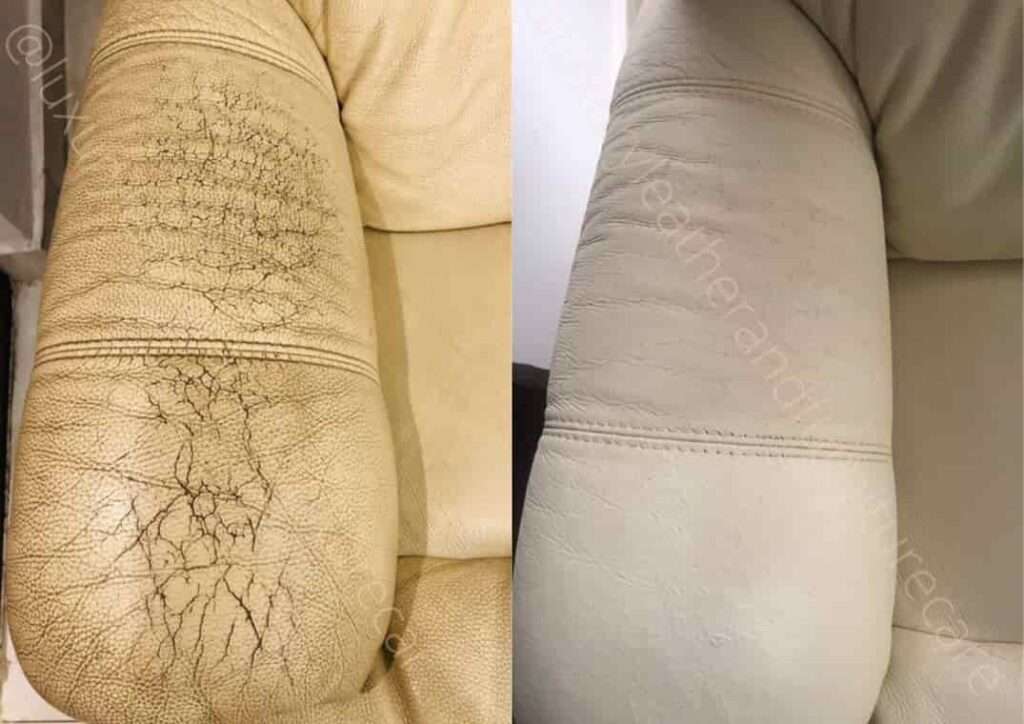
Common types of leather jacket surface damage include light scratches, deep scratches, scuffs, cracks, and areas where the color or finish has been worn away.
Two major kinds of scratches that occur on a surface made of leather include;
Light Scratches:
If the damage is only a superficial scratch or minor scuff, appropriate leather cleaning and conditioning may help improve its appearance.
A leather conditioner that is suitable for the specific leather finish can help maintain flexibility and improve the overall appearance of the surface.
However, avoid aggressive rubbing or untested household products. Applying the wrong product can sometimes change the color, texture, or finish of the leather.
For valuable, vintage, designer, suede, or delicate leather jackets, professional assessment is recommended before attempting a DIY treatment.
Deep Scratches:
Deep scratches can expose the underlying leather or affect the protective finish. These types of scratches may require more than simple cleaning or conditioning.
Depending on the damage, professional treatment may involve cleaning, filling, color matching, refinishing, or conditioning.
Avoid applying household vinegar, cooking oils, or ordinary shoe polish without first confirming that the product is compatible with the specific leather finish.
Incorrect products can cause discoloration, staining, drying, or additional surface damage.
Materials Needed for Leather Jacket Scratch, Tear and Damage Repair
The materials required depend on whether you are dealing with a surface scratch, tear, rip, hole, or other form of leather damage.
Common repair materials may include:
- Leather repair kit
- Leather adhesive
- Leather patch or suitable backing fabric
- Small scissors or shears
- Stitch remover
- Leather filler
- Fine sandpaper
- Soft microfiber cloth
- Suitable leather colorant
- Appropriate sewing thread
- Leather cleaner and conditioner
Not every repair requires all of these materials. The appropriate materials depend on the leather type and severity of the damage.
Steps for Leather Jacket Scratch and Tear Repair
Step 1: Evaluate the Extent of the Damage
Thoroughly inspect the tear, rip, scratch, or hole on your leather jacket to determine its size, depth, and location.
This evaluation helps determine whether you need a simple surface treatment or more involved leather jacket rip repair or leather jacket damage repair.
If the leather is badly cracked, peeling, deeply torn, or separating from its backing, professional assessment is recommended.
Step 2: Clean the Damaged Area
Gently remove dirt and debris from around the damaged area using a suitable leather-safe cleaning method.
Keeping the area clean is important before attempting leather jacket tear repair, patching, filling, or refinishing.
Do not soak the leather or use harsh household cleaning chemicals unless they are specifically recommended for that particular type of leather.
Step 3: Remove Loose Threads Carefully
If loose threads are visible around the tear or rip, carefully trim them using appropriate scissors.
Be careful not to cut into the surrounding leather.
This creates a cleaner surface before attempting to repair a torn leather jacket.
If the stitching itself has failed over a large area, professional stitching or leather repair may provide a better result.
Step 4: Access the Damaged Area
Some repairs require access to the underside of the damaged leather.
For certain tears, the jacket lining may need to be carefully opened to reach the damaged section.
This step requires caution because cutting or opening the lining incorrectly can create additional damage.
If you are unfamiliar with leather garment construction, professional repair is safer than attempting to open the jacket yourself.
Step 5: Prepare the Backing Material
For a larger tear or leather jacket rip repair, an appropriate backing material may be placed underneath the damaged leather.
The backing should be selected according to the leather type, thickness, color, and location of the damage.
The backing material should provide adequate support without creating unnecessary bulk or visible distortion.
Step 6: Apply Leather Adhesive
Apply an appropriate leather adhesive carefully to the damaged area according to the manufacturer’s instructions.
For a significant leather jacket tear repair, the adhesive should be applied evenly and allowed sufficient time to cure.
Avoid using excessive adhesive because it can create a hard or visible area around the repair.
Step 7: Align and Secure the Tear
Carefully align the torn edges and press them together according to the adhesive manufacturer’s instructions.
Proper alignment is particularly important when you repair a torn leather jacket, because uneven edges can remain visible after the repair.
Allow the adhesive to cure completely before flexing or wearing the jacket.
Step 8: Fill and Sand Small Tears or Holes
If the damaged area has created a small gap or hole, an appropriate leather filler may be used according to the product instructions.
This technique can be useful for minor leather jacket hole repair when the surrounding leather remains structurally sound.
Once the filler has dried, carefully smooth the area and use a compatible leather colorant or finish if necessary.
Large holes or extensive damage may require professional leather restoration rather than a simple filler repair.
Step 9: Restore the Color and Finish
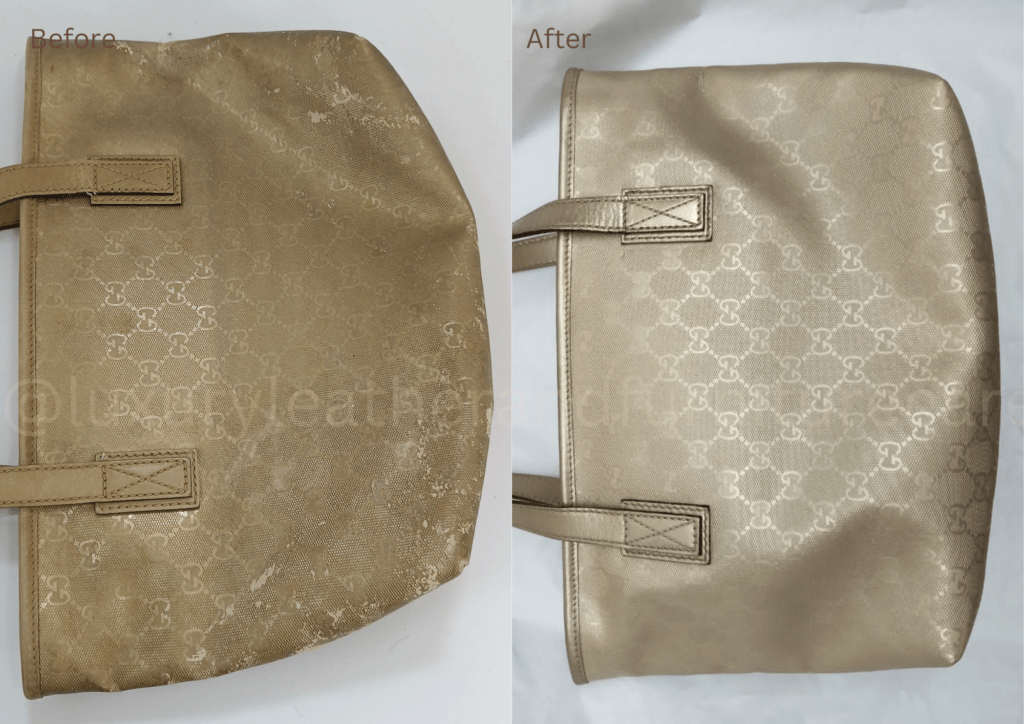
After the structural repair is complete, the repaired area may require color matching or refinishing.
Color restoration is particularly important when the damaged area has lost its original pigment or protective finish.
A professional color-matching process can help the repaired section blend more naturally with the surrounding leather.
This is especially important for black, brown, designer, vintage, or unusual-colored leather jackets where an incorrect shade can make the repair more noticeable.
Step 10: Condition the Jacket
After the repair has been completed, conditioning may help maintain the flexibility and appearance of the leather.
Use a conditioner that is compatible with the specific type and finish of the jacket.
Avoid over-conditioning, as excessive product can sometimes affect the finish or leave an unwanted residue.
For valuable, heavily damaged, vintage, suede, or delicate leather jackets, professional treatment is generally safer than experimenting with household products.
Common Leather Jacket Problems That May Need Professional Repair
Leather jacket damage can take many forms. Depending on the condition of the jacket, professional repair may include:
Leather Jacket Scratch Repair
Surface scratches and deeper scratches may require cleaning, conditioning, color restoration, or refinishing depending on their severity.
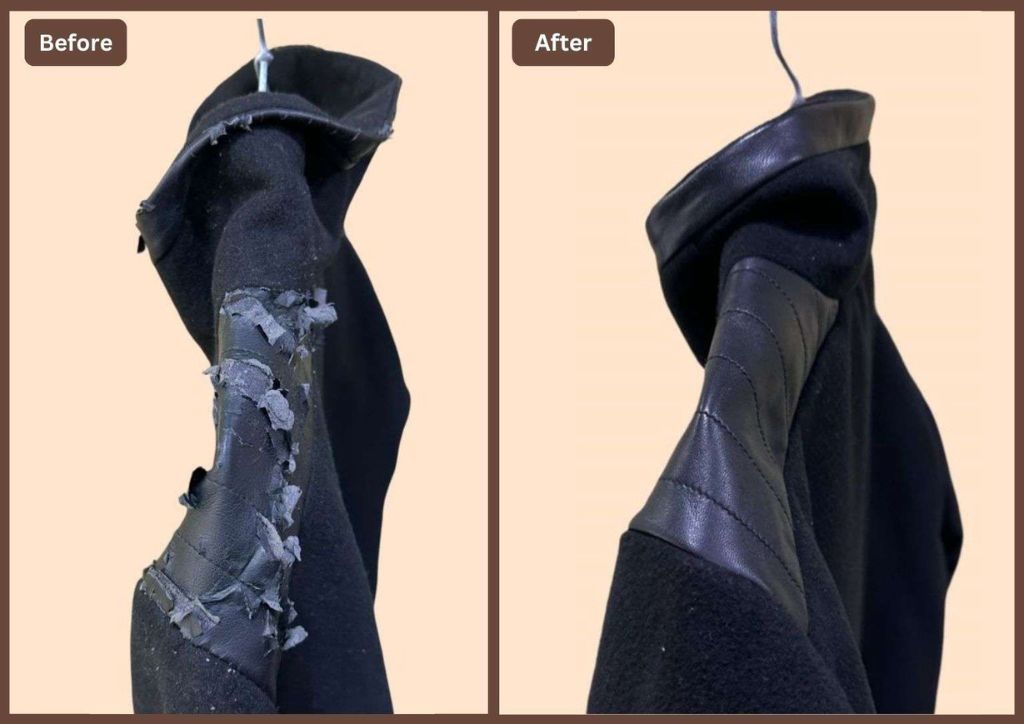
Leather Jacket Tear Repair
Tears may require backing, adhesive, stitching, filling, or a combination of repair techniques.
Leather Jacket Rip Repair
A rip can weaken the surrounding leather and may become larger if it is not addressed properly. The repair method depends on the size and location of the rip.
Leather Jacket Hole Repair
Small holes may sometimes be repaired with backing and filler. Larger holes may require more extensive leather restoration.
Leather Jacket Scuff Repair
Scuffs can affect the surface finish and color of the jacket. Appropriate cleaning, conditioning, recoloring, or refinishing may help restore the affected area.
Leather Jacket Damage Repair
More extensive damage may involve multiple treatments, including cleaning, stitching, patching, color restoration, and refinishing.
When Should You Choose Professional Leather Jacket Repair?
Not every leather jacket problem can be safely repaired at home.
Professional leather jacket repair may be a better option when:
- The leather has a deep tear or rip
- There is a large hole
- The leather is cracked or peeling
- The jacket has damaged stitching
- The color has significantly faded
- A large area requires refinishing
- The jacket is vintage or designer
- The leather is delicate or unusual
- You are unsure which repair product to use
- A previous DIY repair has made the damage worse
If you are unsure how to fix a leather jacket, professional assessment can help determine the safest repair and restoration method.
Can a Damaged Leather Jacket Be Restored?
In many cases, damaged leather jackets can be repaired or restored depending on the condition of the leather.
The final result depends on several factors, including:
- Type of leather
- Age of the jacket
- Location of the damage
- Size and depth of the damage
- Condition of the surrounding leather
- Existing color and finish
- Previous repairs or treatments
A professional leather specialist can inspect the jacket and determine whether repair, restoration, recoloring, stitching, or another treatment is appropriate.
Frequently Asked Questions
Can a scratched leather jacket be repaired?
Yes. Minor scratches and scuffs may sometimes be improved with appropriate leather-care techniques, while deeper scratches may require professional cleaning, filling, recoloring, or refinishing. The appropriate leather jacket scratch repair method depends on the leather type and severity of the damage.
Can a torn leather jacket be repaired?
Yes. Depending on the size and location of the tear, a leather jacket may be repaired using adhesive, backing material, stitching, filling, or refinishing. Significant tears are best assessed by a professional leather jacket tear repair specialist.
Can a ripped leather jacket be repaired?
Many leather jacket rips can be repaired when the surrounding leather is still structurally sound. The appropriate leather jacket rip repair method depends on the size, location, and condition of the leather.
Can a hole in a leather jacket be repaired?
Small holes may sometimes be repaired using suitable backing material and leather filler, followed by color matching and refinishing. Larger holes may require more extensive leather jacket hole repair or professional restoration.
Can I fix a leather jacket at home?
Minor surface scratches may sometimes be treated at home with suitable leather-care products. However, deep tears, rips, holes, peeling, cracking, damaged stitching, and significant color loss are better handled by an experienced leather repair professional.
When should I get professional leather jacket repair?
Professional repair is recommended when the jacket has a deep tear, large hole, extensive cracking, peeling, damaged stitching, severe discoloration, or valuable/vintage leather that requires careful handling.
Conclusion
Scratches, scuffs, tears, rips, and holes are common forms of damage that can affect a leather jacket over time. Minor surface damage may sometimes be improved with appropriate leather-care techniques, but deeper damage often requires careful leather jacket scratch repair, leather jacket tear repair, or professional restoration.
If your jacket has a serious tear, rip, hole, cracked leather, damaged stitching, or significant color loss, attempting a DIY repair may make the problem worse.
Professional assessment can help determine the safest repair and restoration method for your particular leather jacket while protecting its original appearance and finish.
Need Professional Leather Jacket Repair?
If your leather jacket has scratches, tears, rips, holes, scuffs, peeling, damaged stitching, or other signs of wear, Luxury Leather & Furniture Care can assess the condition and recommend an appropriate repair or restoration treatment.
Our leather-care specialists handle leather jacket repair, cleaning, restoration, recoloring, polishing, and other leather-care requirements with attention to the material, finish, and condition of each item.
Book The Luxury Leather & Furniture Care services today for repairing/ restoring Leather Products.
Contact us today at our official website – https://luxuryleatherfurniturecare.com/
Email: info@luxuryleatherfurniturecare.com or call us at – +91 92892 38864